
In This Article
For years, cybersecurity focused on building taller digital walls around corporate and personal networks. In 2026, supply chain cyber targets and compromised identities have made that perimeter-first mindset obsolete. Instead of brute-forcing firewalls, modern threat actors are logging in with valid credentials and exploiting the trusted software ecosystems organizations rely on every day.
Why Supply Chain Cyber Targets Have Quadrupled
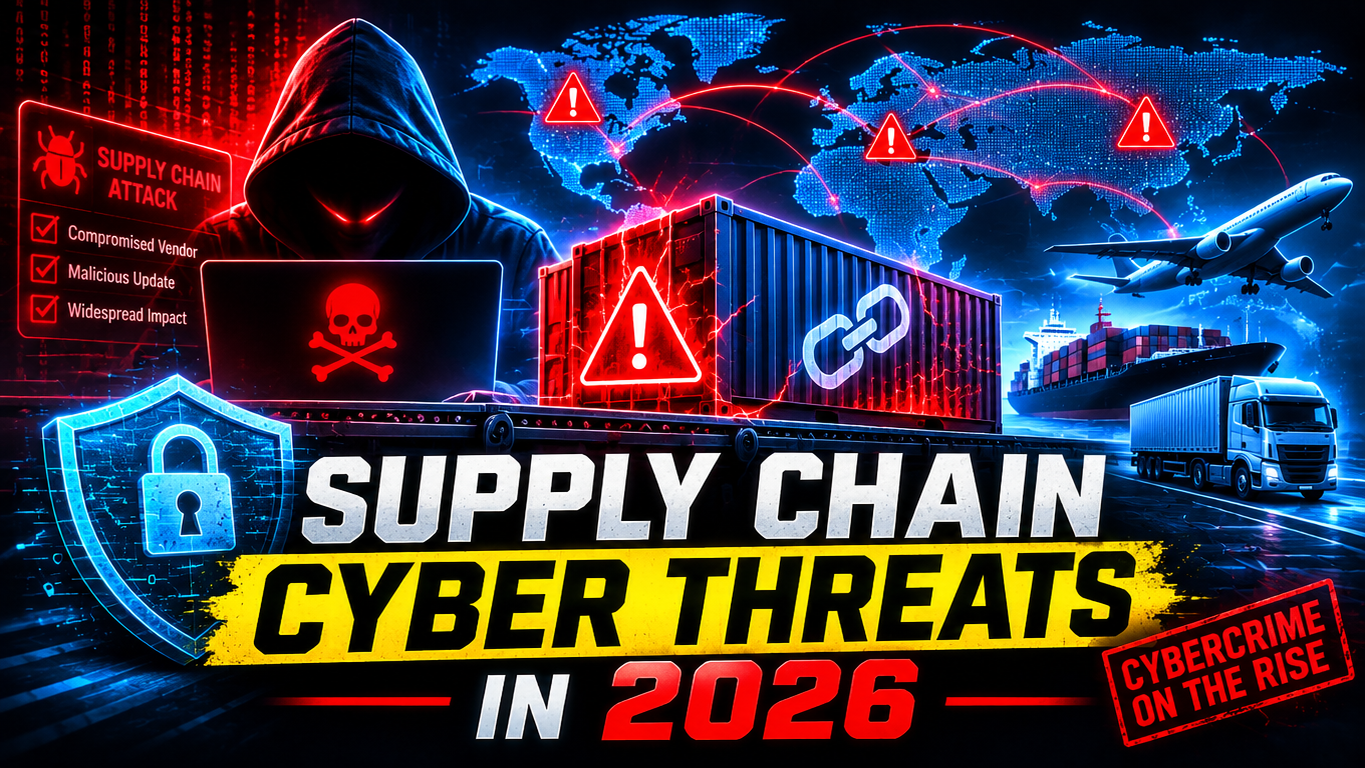
Modern websites, mobile apps, and businesses run on sprawling webs of third-party APIs, open-source packages, cloud integrations, and SaaS vendors. According to IBM X-Force threat intelligence, major supply chain and third-party compromises have quadrupled over the past five years.
The reason is simple economics for attackers: compromising a single vendor, WordPress plugin developer, or OAuth integration gives criminals indirect access to dozens or even thousands of downstream customers at once. Rather than fighting through a carefully guarded front door, adversaries walk in through a supplier’s trusted back door using legitimate tokens.
Alongside upstream vendor breaches, exploitation of public-facing web applications surged 44% year-over-year. Unpatched software, exposed administrative panels, and misconfigured cloud deployments remain the fastest way for automated scanners to gain an initial foothold.
Open-Source Dependencies and CI/CD Risks
Every JavaScript package, PHP library, or container image added to a project expands the attack surface. Recent incidents involving self-propagating worms in open-source package registries and compromised build pipelines show how quickly malicious code can cascade across hundreds of live deployments before anyone notices.
- Audit every third-party plugin, theme, and external script before installing it.
- Pin dependency versions and remove unused packages or integrations immediately.
- Monitor vendor security advisories and subscribe to CVE alerts for your core stack.
Identity Is Now the Primary Security Perimeter
With remote work, cloud dashboards, and AI agent platforms everywhere, stolen credentials remain one of the easiest initial entry points for attackers. Once inside, criminals move laterally across cloud storage, email, and developer repositories while looking completely identical to legitimate users.
Traditional antivirus tools struggle to catch identity abuse because no malware is required when an attacker holds a valid session cookie or OAuth token. Security teams are responding by shifting away from static network boundaries to identity-centric security:
- Enforce Phishing-Resistant MFA: Replace SMS verification codes with hardware security keys or passkeys tied cryptographically to real domains.
- Apply Least-Privilege Access: Give every user, API key, and service account only the minimum permissions required for its specific job.
- Monitor Session Anomalies: Alert on impossible travel logins, newly created OAuth apps, and unexpected privilege escalations.
AI Supercharges Both Offense and Defense
Artificial intelligence has accelerated every stage of the cyber kill chain. Defenders are adopting AI-assisted security operations to triage alerts faster and close a persistent global cybersecurity skills gap. At the same time, threat actors are using generative AI to scale hyper-personalized social engineering, automate vulnerability discovery, and harvest credentials stored inside AI chatbot and agent platforms.
Because AI agents often connect to email, calendars, code repositories, and internal databases, a single compromised agent integration can expose multiple systems simultaneously. Treating AI tools as privileged identities—with strict scopes and logging—is now essential.
Ransomware Has Evolved Into Multi-Extortion
Ransomware is no longer just about encrypting files and demanding a decryption key. Modern operators run multi-extortion playbooks: quietly exfiltrating sensitive data first, encrypting production systems second, and threatening to publish customer records or notify business partners if the ransom goes unpaid.
Offline, immutable backups remain mandatory for operational recovery, but backups alone cannot undo a data leak. Preventing unauthorized data exfiltration through network segmentation, outbound traffic monitoring, and strong endpoint detection is just as critical.
Practical Takeaways for 2026
Whether you manage a personal website, a growing startup, or an enterprise environment, protecting yourself against supply chain cyber targets and identity theft comes down to disciplined fundamentals. Inventory every third-party service connected to your accounts, lock down every login with phishing-resistant MFA, keep public-facing software patched promptly, and assume automated scanners are probing your infrastructure around the clock.

Leave a Reply